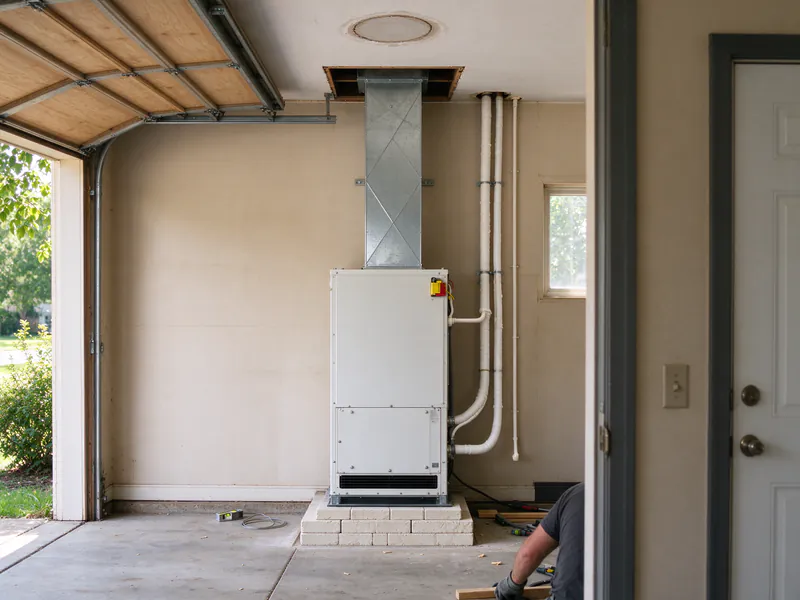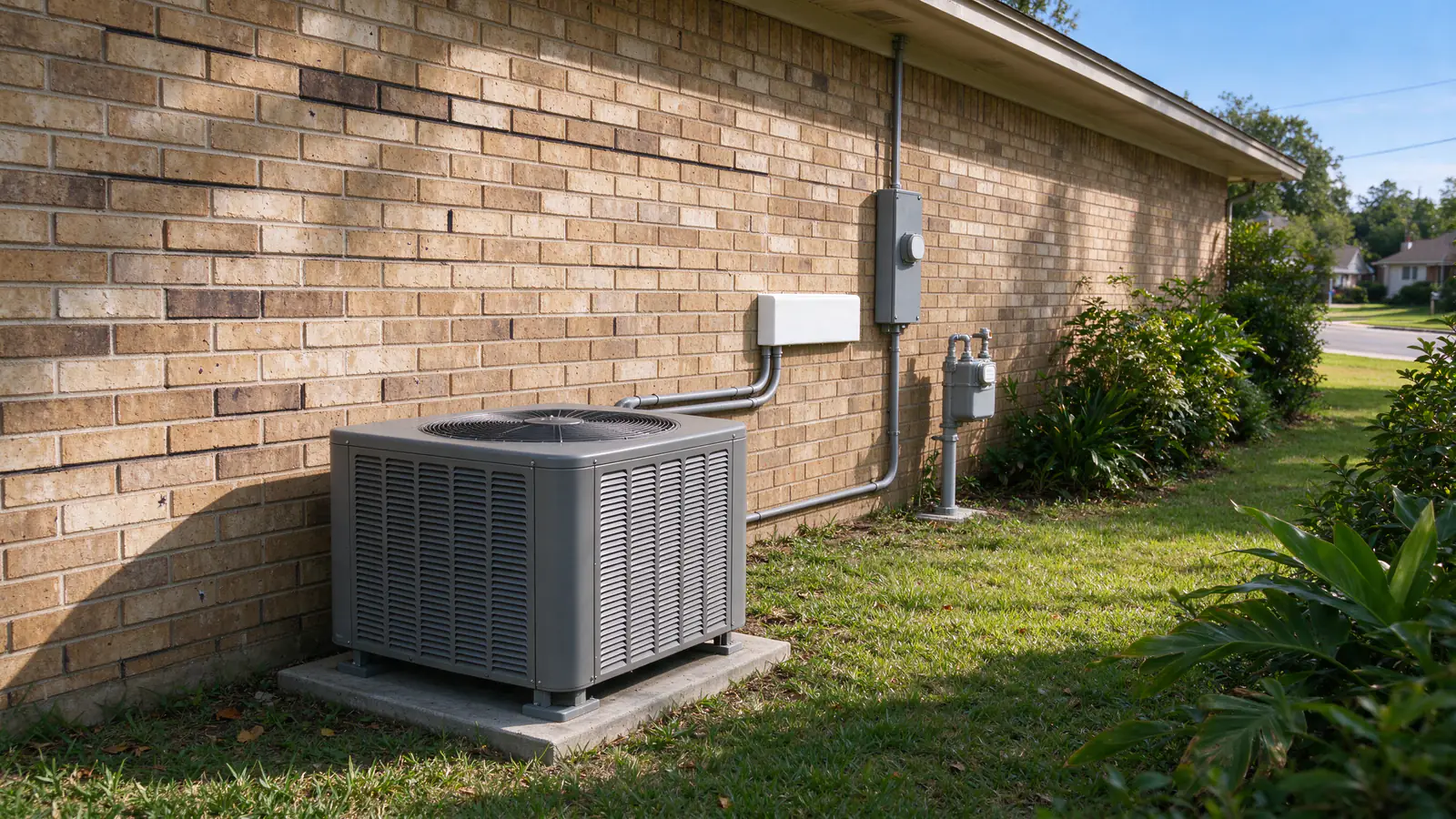
Going all-electric in a gas house
Retiring a gas furnace for a heat pump is a bigger decision than replacing an AC, and on Memphis gas rates it is not always the cheaper one. Bluffline Memphis Heat Pumps converts gas houses to heat pumps across Memphis and Shelby County.
We start with the honest numbers, then look at your furnace.
Gas is cheap here
On MLGW’s rates, gas in a 95 percent furnace costs about $6.30 per million BTU of delivered heat. A heat pump costs about $10.20 on a mild day and $14.30 on a cold one. So the case for all-electric rarely rests on the heating bill.
When all-electric makes sense
Most all-electric conversions here happen because something else forces the choice. The usual reasons:
- The furnace fails its safety check. A cracked heat exchanger or a failing flue means replacing the furnace anyway.
- The AC is due at the same time. Both halves need replacing, and one heat pump replaces two machines.
- The furnace is in a bad spot. A garage or a cramped closet where combustion air and venting are hard to get right.
- You don’t want combustion in the house. Some owners simply want gas heating out.
When none of those apply, we price dual fuel alongside, because a sound furnace and a heat pump together cost less to run on MLGW gas.
When to keep the gas
If the furnace is less than about ten years old, passes its safety check and its blower can carry a heat pump, keeping it is usually the better money. A heat pump replaces the AC and carries mild days, and gas carries the cold ones.
The gas furnace or heat pump guide works through the numbers for a typical Memphis house, and the switchover guide shows where gas should take over.
Gas prices move
MLGW’s purchased gas adjustment changes every month. In February 2026 it pushed gas to roughly $12.20 per million BTU, close to the heat pump’s mild-day cost. MLGW has also proposed raising its monthly gas service charge over the next few years. Nobody can promise where gas goes next, which is one reason some owners prefer one fuel.
The furnace check comes first
On the first visit we inspect the furnace’s heat exchanger, flue and blower and take a combustion reading. That check decides which options are on the estimate.
What the check can show
- A sound furnace: both options are priced, and dual fuel usually wins on running cost.
- A furnace with years left but a weak blower: dual fuel may need a new furnace, which narrows the price gap with all-electric.
- A failing heat exchanger or flue: the furnace has to go, and the choice is a new furnace with a heat pump or all-electric.
What the conversion involves
An all-electric conversion changes more than a heat pump replacement. Most take two or three days.
- Pull the mechanical permit for your town.
- Recover the AC’s refrigerant and remove the AC and the furnace.
- Shut off and cap the furnace’s gas branch and seal the flue opening.
- Set a matched air handler with backup strips where the furnace stood.
- Add a circuit for the air handler where the panel allows.
- Set the heat pump on a raised pad and braze, pressure-test and evacuate the line set below 500 microns.
- Charge by weight, set the strip lockout and test heating, cooling, defrost and the strips.
- Leave the readings in writing and schedule the inspection.
The electrical side
A gas furnace needs a small 120-volt circuit. An air handler with strips needs a 240-volt circuit sized for the strips. Many Memphis panels have room for one more double-pole breaker; some older ones don’t. The panel guide explains the checks, and any electrical change appears on the estimate as its own line.
Backup heat without gas
Without a furnace, the heat pump carries the house with strips as backup. At Shelby County’s 20-degree design temperature a correctly sized heat pump needs only a modest strip kit, usually 5 to 10 kW, which also warms the air during defrost.
Ice storms and outages
A gas furnace stops in a power outage too, because its blower, igniter and controls need power. So all-electric does not add outage risk for heat, but a generator plan changes: strips need far more power than a furnace blower. The ice storm guide covers what to plan for.
What it costs
Bluffline’s typical range for a whole-home ducted heat pump system is $8,000 to $16,000. Your written estimate after the visit sets the price.
Furnace removal, capping the gas branch and sealing the flue are usually inside that range. A new circuit or panel work is listed separately.
Rebates
TVA EnergyRight pays $500 for a qualifying heat pump at 15 SEER2 and $800 at 17 SEER2, installed by a participating contractor in TVA’s Quality Contractor Network. MLGW-specific terms for replacing gas heat aren’t published, so we confirm eligibility per address. The cost page covers every range, and the Memphis buying guide puts the whole decision in order.
Other gas appliances
Capping the furnace branch doesn’t touch the rest of the gas in the house. A water heater, range or dryer keeps its own line.
If the furnace was the last gas appliance, MLGW can tell you how to close the gas account and remove the meter.
Ducts sized for gas heat
Gas furnaces push hotter air than a heat pump, so some ducts that were fine for a furnace are tight for a heat pump, which needs about 400 cubic feet of air per minute per ton.
We take a static pressure reading on the visit. If the return is small or the trunk leaks, heat pump ductwork explains the fix, and it goes on the estimate as its own line.
Combustion air and the old closet
With the furnace gone, the closet no longer needs combustion air openings. We leave existing openings alone unless you ask, since a water heater in the same space may still rely on them.