January bills that spike with an electric furnace
About half of Memphis homes heat with electricity, according to the Census Bureau, and many do it with resistance strips in the air handler. Strips turn one unit of electricity into one unit of heat.
Bluffline Memphis Heat Pumps replaces electric furnaces with heat pumps across Memphis, Millington and the towns around them. A heat pump moves heat instead of making it.
Why the bill changes most here
On MLGW’s rates, strip heat costs about $35.80 per million BTU of delivered heat. A heat pump costs about $10.20 on a mild winter day and about $14.30 on a cold one. No other job we do changes a winter bill as much.
What actually changes in the house
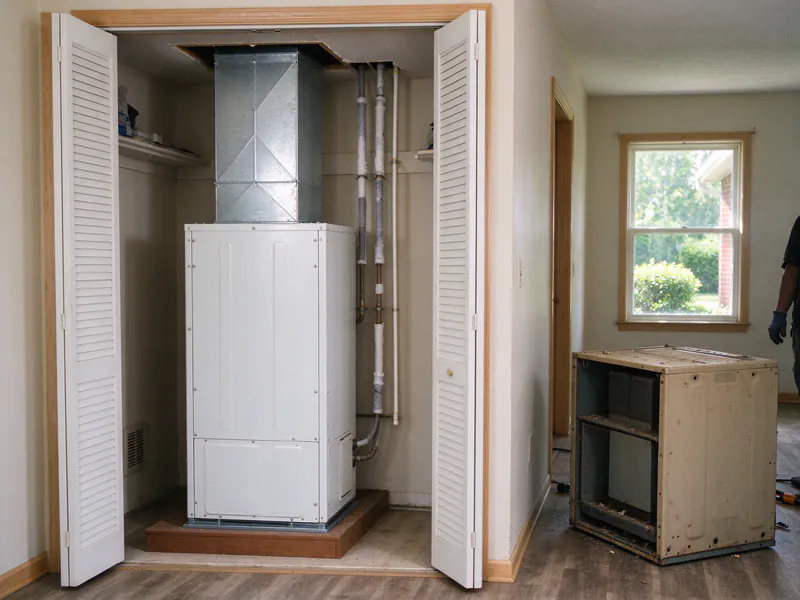
Less than you might think. The ducts stay. The thermostat moves to a heat pump model. Two things are new.
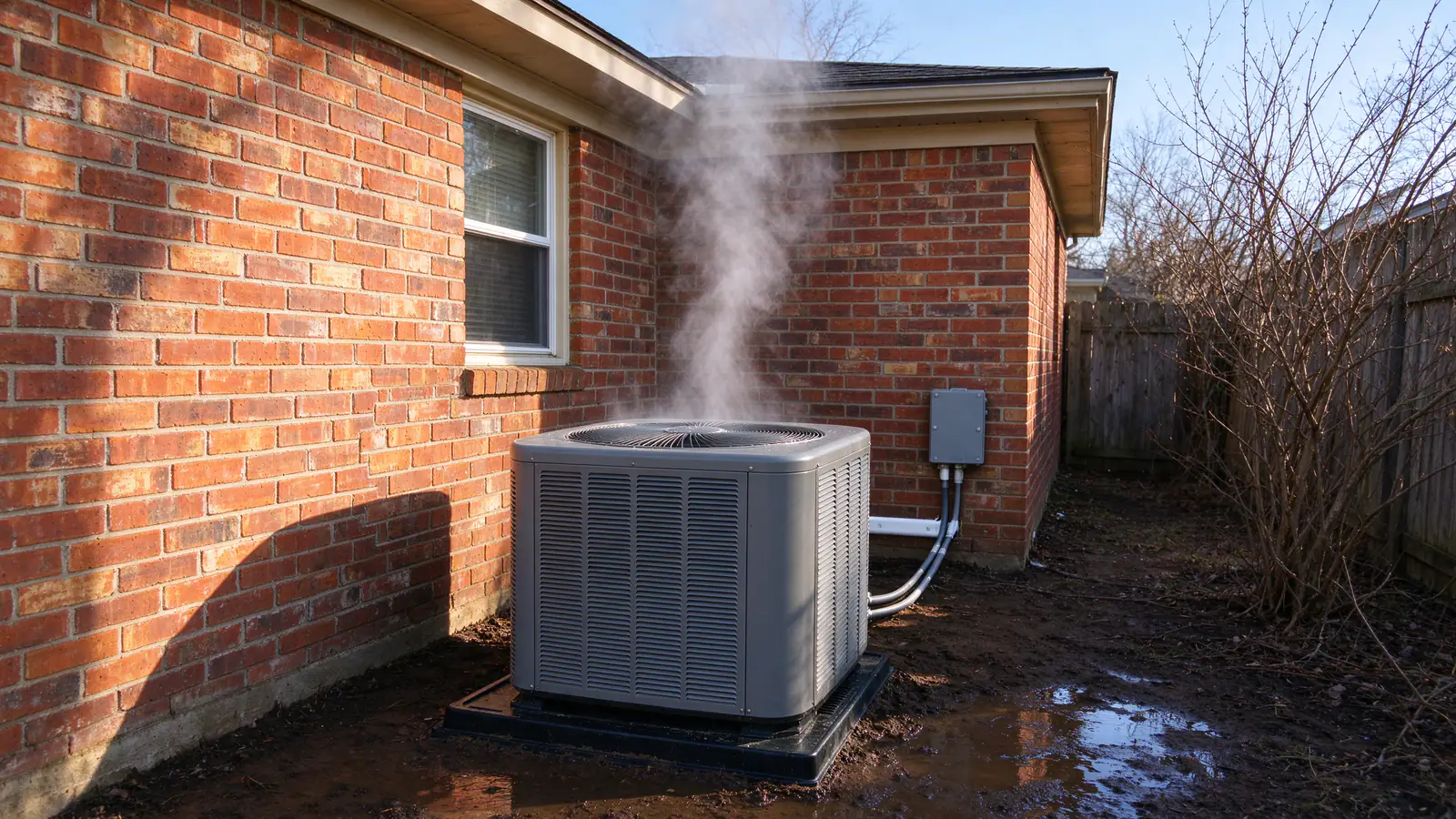
- Outside: a heat pump takes the AC’s place on the pad. It cools in summer exactly as the AC did.
- Inside: a matched air handler replaces the electric furnace, with a smaller strip kit for backup.
The air handler usually fits the same closet, attic or crawlspace spot, on the same platform. Where the closet is tight, we measure before we pick the cabinet.
Sizing the heat pump and the backup
We run a load calculation for Shelby County’s design conditions: 95 degrees in summer and 20 degrees in winter. The heat pump is sized for the house, and the strips are sized for the gap at 20 degrees.
That gap is usually small. A house that needed a 15 kW furnace often needs 5 to 8 kW of backup with a heat pump. The sizing guide explains how the calculation works.
Why smaller strips matter
Smaller strips draw less power when they do come on, which can keep a panel upgrade off the estimate. They also stop a cold-morning recovery from pulling 15 kW at once.
Aux heat, emergency heat and the lockout
The thermostat decides when strips run. Set it wrong and the strips run on mild days, and the savings disappear.
- Auxiliary heat comes on automatically when the heat pump can’t keep up, during defrost, or when you raise the setpoint a lot at once.
- Emergency heat is a manual switch that turns the heat pump off and runs strips alone. It is for a broken outdoor unit, not cold weather.
- The lockout keeps strips off above an outdoor temperature we set with you, usually around 30 to 35 degrees.
An outdoor sensor makes the lockout work. The aux and emergency heat guide and the thermostat setup guide cover the settings.
Where strip heat is most common
Electric heat is the majority in Memphis itself and in Millington, where about two-thirds of homes heat with electricity and the typical house dates from around 1970. Our Millington page covers that town’s permit path.
Across the suburbs strip heat is less common but still sits in roughly a third to two-fifths of homes, usually in houses that were built all-electric.
Houses where it fits best
- 1960s and 1970s ranches with an electric furnace in a hall closet and a separate AC outside.
- All-electric houses from the 1980s and 1990s with an attic or crawlspace air handler.
- Any house where the AC is near the end anyway, since the heat pump replaces it too.
When the ducts need work first
Older crawlspace ducts in strip-heat houses often leak or have come loose. A heat pump delivers cooler supply air than strips in winter, so leaks you never noticed with 120-degree strip air can make rooms feel drafty. We test static pressure on the visit, and heat pump ductwork explains what the fixes involve.
The panel and the circuits
An electric furnace usually sits on a large circuit, often 60 amps. The new air handler with smaller strips needs less, and the outdoor unit can often reuse the AC’s circuit.
On the visit we check the panel’s capacity, the breaker sizes and the wire. If the existing circuits fit the new equipment’s ratings, they stay. If not, the change is a separate line on the estimate, done by a licensed electrician. The panel guide explains when an upgrade is really needed.
What it costs
Bluffline’s typical range for a whole-home ducted heat pump system, outdoor unit and matched air handler with existing ducts reused, is $8,000 to $16,000. Your written estimate after the visit sets the price.
What moves the number
- The heat pump’s size and efficiency tier.
- Whether the line set can be reused.
- Duct repairs found during the static pressure test.
- Any electrical change at the panel.
- Access: a closet is quicker than a low crawlspace.
TVA EnergyRight pays $500 for a qualifying heat pump at 15 SEER2 and $800 at 17 SEER2, installed by a participating contractor in TVA’s Quality Contractor Network. The cost page covers every range.
The install, step by step
Most strip-heat swaps take one or two days.
- Pull the mechanical permit for your town.
- Recover the AC’s refrigerant and remove the AC and the electric furnace.
- Set the matched air handler with its strip kit and the heat pump on a raised pad.
- Braze the line set under nitrogen, pressure-test it and pull a vacuum below 500 microns.
- Charge by weight and check against the maker’s numbers.
- Wire the outdoor sensor and set the strip lockout with you.
- Test heating, cooling, defrost and the strips, and leave the readings in writing.
Your first winter bill
Expect the heating part of the bill to drop by more than half against strip heat, with the biggest change in January and February. Cold snaps still bring the strips on for a few hours.
Reading the bill
MLGW bills show kilowatt-hours by month. Compare the same months year to year, since a mild January and a hard one can differ a lot. Reading your MLGW bill after a heat pump shows what to look for.