The indoor half is the part you hear about last
The air handler is the indoor half of a heat pump: the blower, the indoor coil, the backup strips and the drain pan.
It sits in a closet, the attic, a garage or a crawlspace, and it tends to fail quietly until water shows up on a ceiling. Bluffline Memphis Heat Pumps replaces air handlers across Memphis and the towns around it, and we check the outdoor unit before we price anything.
Signs the air handler is the problem
- Water stains on a ceiling below an attic unit, or a wet closet floor.
- A musty smell when the system starts, from a wet pan or coil.
- Weak airflow at every register with a clean filter.
- A loud or grinding blower, or one that won’t start.
- A coil that leaks refrigerant, so the system needs topping up every summer.
Keep the outdoor unit or replace both?
The answer depends on the outdoor unit’s age and refrigerant. Both halves are rated as a matched pair, so the new air handler has to be one the outdoor unit’s maker lists for it.
- Outdoor unit under about 10 years, on R-410A or a newer refrigerant: replace the air handler alone. Bluffline’s typical range for an air handler only is $2,000 to $4,500.
- Outdoor unit older, failing, or on R-22: replace the whole system. Bluffline’s typical range for that is $8,000 to $16,000.
Your written estimate after the visit sets the price. When the outdoor unit is also near the end, see heat pump replacement.
Strip heat sized for the house
Most heat pump air handlers carry electric strips for backup. They run on the coldest mornings and during defrost. The right size depends on the house’s heat loss at Shelby County’s 20-degree design temperature and on what the heat pump delivers there.
Too big, too small
- Too big: a 15 kW kit draws far more power than the house needs and can push the panel toward an upgrade.
- Too small: the house drifts below the setpoint on a 20-degree morning.
Many Memphis houses land between 5 and 10 kW. The thermostat’s lockout keeps them off above about 30 to 35 degrees. Aux and emergency heat explains how staging works.
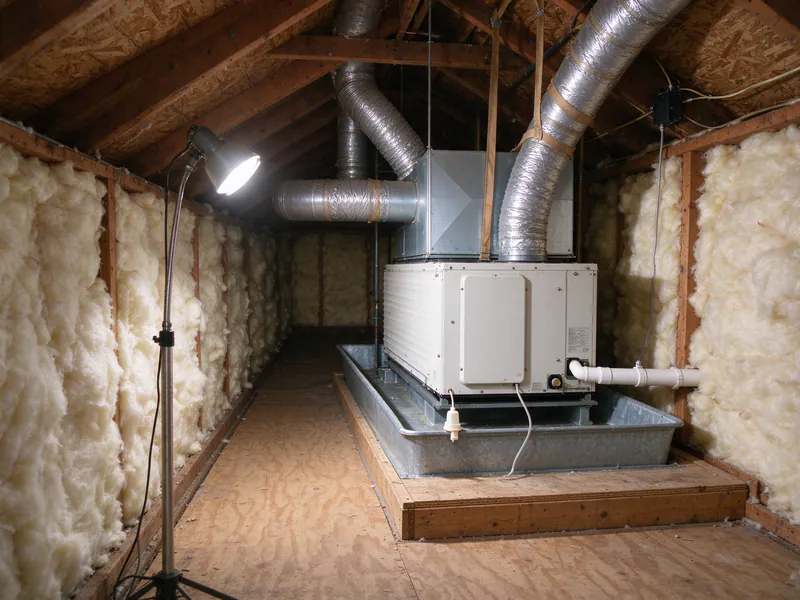
Attic air handlers and water
Memphis summers put a lot of water through an air handler. On a humid afternoon a 3-ton system can pull several gallons out of the air, and all of it has to drain.
In an attic, that water sits above a ceiling. So every attic air handler we install gets:
- A secondary pan under the unit, on a level platform.
- A float switch that shuts the system off if water reaches the pan.
- A drain line pitched to the outside or to a drain, with a cleanout.
We test the float switch by filling the pan until the system stops. The humidity guide explains why so much water comes out of Memphis air.
Closets, garages and crawlspaces
Each location changes the job:
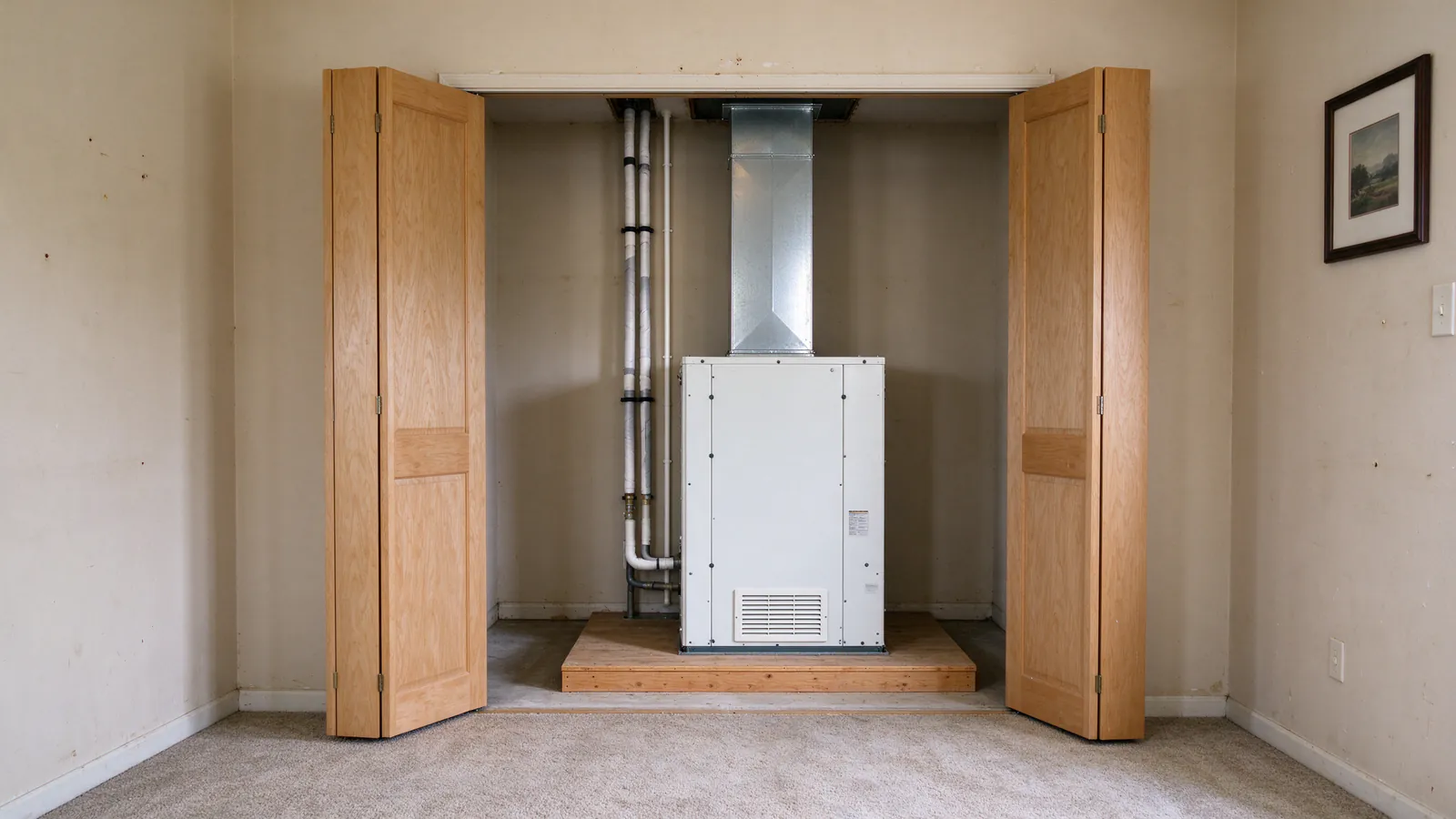
- Hall closets: quick to service. The cabinet has to fit the closet depth with room for the return and the door.
- Garages: the unit stands on a raised stand, and the return can’t draw air from the garage itself.
- Crawlspaces: low clearance and damp air. The cabinet sits on a pad above the vapor barrier, and the connections need sealing so the blower doesn’t pull crawlspace air. Crawl space ductwork covers the details.
Getting it in and out
Attic hatches can be as small as 22 by 30 inches. Most air handlers fit through in their shipping orientation, and the old one comes out in sections. We measure the hatch, the path and the platform on the visit.
Airflow and the blower
The blower decides how much air the system moves and how well it dries the house. Many new air handlers have variable speed or multi-speed blowers, which can run slower for better moisture removal.
On start-up we set the blower to the maker’s airflow for the heat pump’s size and check static pressure. If the ducts are restricting it, the estimate says so. Heat pump ductwork explains the fixes.
What the replacement day looks like
Most air handler replacements take one day.
- Pull the mechanical permit for your town.
- Pump the refrigerant down into the outdoor unit, or recover it.
- Remove the old air handler and set the new platform, pan and float switch.
- Set the matched air handler and connect the plenum and return, sealed.
- Braze the refrigerant lines under nitrogen, pressure-test and evacuate below 500 microns.
- Re-pitch the condensate line with a cleanout.
- Set airflow, test cooling, heating, the strips and the float switch, and leave the readings with you.
The commissioning checklist lists what each reading should be.
Upgrading while the indoor half is open
Replacing the air handler is the cheapest moment to change a few things that are hard to reach later:
- A variable speed blower, which runs slower and longer for better moisture removal. Paired with a variable speed heat pump it does the most good, but even with a single-stage outdoor unit it can help a damp house.
- A larger return connection, when the static pressure reading says the old one was choking the blower.
- A better filter rack, sized so a deeper filter doesn’t add restriction.
- Smaller strips, when the old unit carried a 15 kW kit from its days as an electric furnace.
What stays the same
The thermostat often stays, as long as it is a heat pump model with an outdoor sensor or room for one. The ducts stay unless the static test says otherwise, and the outdoor unit keeps running as it did.
Rebates and the indoor half
TVA EnergyRight’s heat pump rebate is tied to the system’s rated efficiency, which depends on the matched pair. Replacing only the air handler doesn’t usually qualify on its own. TVA does pay $300 for qualifying duct sealing and insulation. The cost page covers every range.