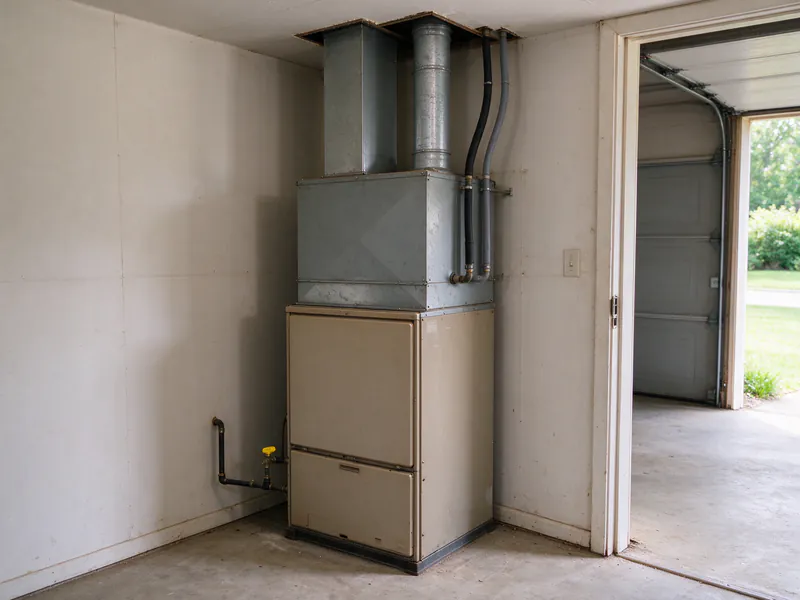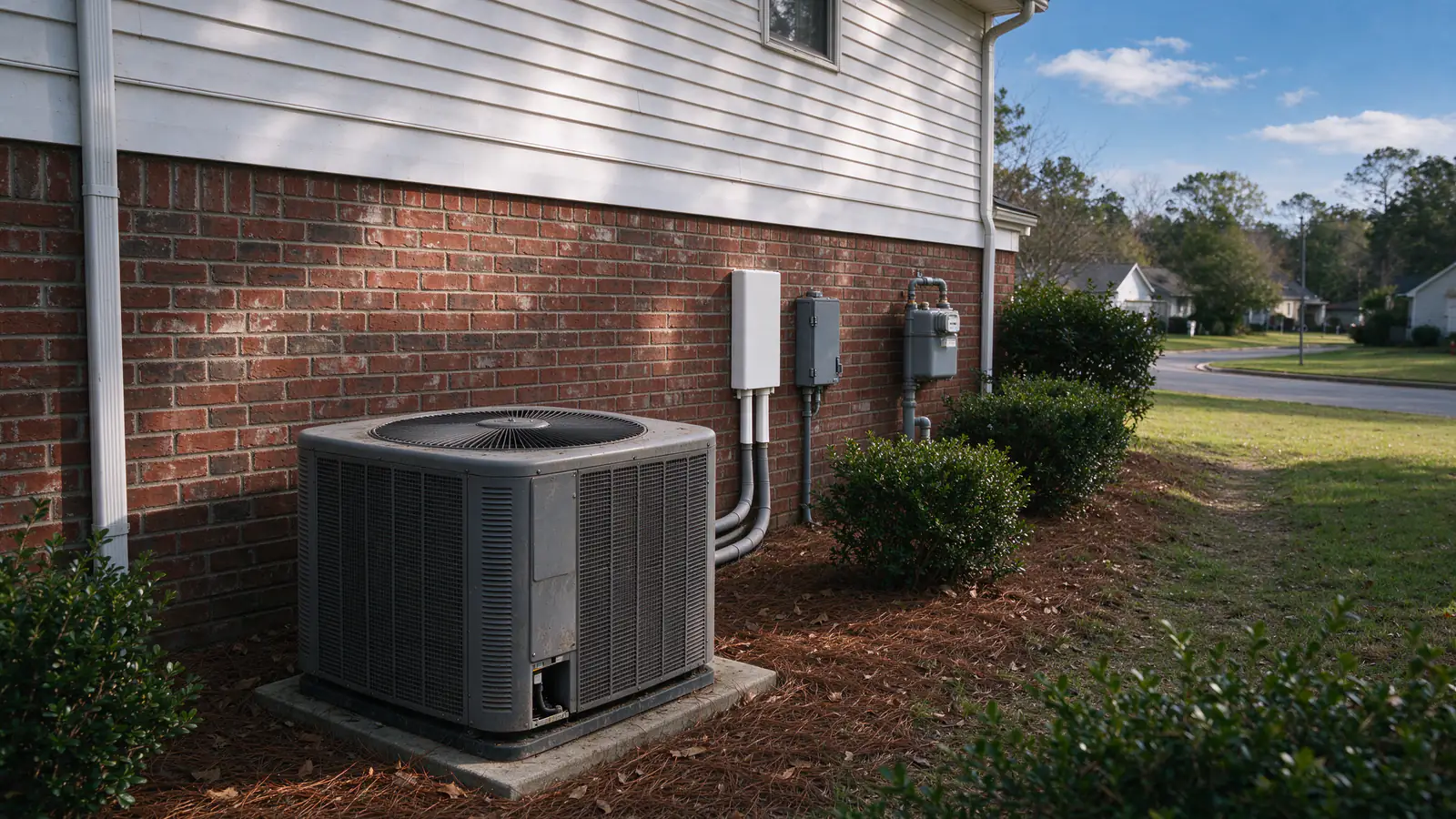
Your AC quit and the furnace is fine
Put a heat pump where the AC was and keep the gas furnace for the coldest hours. That is a dual fuel system, and for a Memphis house with a sound furnace it is usually the first option Bluffline Memphis Heat Pumps prices.
What you get
- Summer: the heat pump cools exactly as an AC would.
- Winter: it heats until the outdoor temperature drops to a switchover point you choose, then the thermostat hands heating to the furnace.
- Always: two heat sources instead of one, and a furnace that still has years in it stays in service.
Most of the houses this fits heat with MLGW gas. In Germantown about two-thirds of homes do, and in Collierville and Bartlett well over half, according to the Census Bureau’s American Community Survey. Our Germantown page covers the local side, including where a 1980s furnace and a newer AC tend to stand.
What gas and electricity cost here
On MLGW’s current rates, gas heats more cheaply per BTU than a heat pump. That is the honest starting point, and it changes how we set a dual fuel system.
Per million BTU of delivered heat, worked from MLGW’s published residential rates:
- Gas in a 95 percent furnace: about $6.30
- Heat pump, mild day: about $10.20
- Heat pump, cold day: about $14.30
- Electric strips: about $35.80
The full comparison is in gas furnace or heat pump in Memphis. The gas side moves, though. MLGW’s purchased gas adjustment changes every month, and in February 2026 it pushed gas to roughly $12.17 per million BTU. In a month like that, the heat pump is the cheaper heat on mild days.
So where does the switchover go?
It is your call, and we set it with you:
- Comfort first. Run the heat pump down to about 35 degrees. Heat pump air is steadier and quieter on mild days, at a small extra cost on today’s rates.
- Cost first. Set the switchover high and let gas carry nearly all of winter. The heat pump becomes the AC and the backup.
- Somewhere between. A setting between 30 and 40 degrees, moved up when the gas adjustment drops and down when it jumps.
An outdoor sensor makes the handoff automatic. We show you the one setting that moves it, and the switchover guide works through the numbers.
What we check before we promise anything
A heat pump sits on the furnace, so the furnace has to be up to it. On the first visit we look at three things.
The heat exchanger and flue
We inspect the furnace’s heat exchanger and venting and take a combustion reading. A cracked heat exchanger or a failing flue changes the answer to a gas furnace to heat pump conversion instead.
The blower
A heat pump needs about 400 cubic feet of air per minute for each ton. Older furnace blowers sometimes can’t deliver that at a speed that works, and if yours can’t, the estimate says so rather than leaving the heat pump starved for air.
The fit
The new coil sits on top of an upflow furnace. In a closet with a low ceiling, we may need a short sheet-metal transition, and the coil has to match the outdoor unit as a rated pair.
Sizing it for the house
We size the heat pump from a load calculation, not from the old AC’s nameplate. Memphis houses were often fitted with more capacity than they needed, and new windows or attic insulation shrink the load further.
Shelby County’s design conditions are 95 degrees in summer and 20 degrees in winter. With a furnace covering the coldest nights, a heat pump sized for the cooling load is usually the right size.
Why bigger is worse here
An oversized unit short-cycles and leaves the house clammy, the opposite of what you want through a Memphis July. How sizing works explains the method.
What the job includes
Most dual fuel installs take one day, because the furnace, its venting and most of the ductwork stay as they are:
- Pull the mechanical permit for your town.
- Recover the refrigerant from the old AC and remove it and its coil.
- Set the matched coil on the furnace and the heat pump on a raised pad.
- Braze the line set under nitrogen, pressure-test it and pull a vacuum below 500 microns.
- Charge by weight and verify against the maker’s numbers.
- Wire the dual fuel thermostat and outdoor sensor, and set the switchover.
- Test cooling, heating, defrost and the gas handoff, and write the readings down for you.
If the existing line set is the right size and holds pressure, we flush and reuse it. If it is undersized, damaged or buried somewhere we can’t verify, we replace it.
What it costs
Bluffline’s typical range for a dual fuel heat pump added to an existing gas furnace is $5,000 to $10,000. Your written estimate after the site visit sets the price.
The number moves with the heat pump’s size and efficiency tier, whether the coil needs a transition, line set length and condition, and any duct or electrical work. A variable speed heat pump sits near the top of the range. The cost guide covers every driver.
Rebates
TVA EnergyRight pays $800 for qualifying heat pumps rated 17 SEER2 or higher and $500 at 15 SEER2, when a participating contractor in TVA’s Quality Contractor Network installs the equipment. The federal 25C tax credit ended for equipment installed after 2025. See how the TVA rebate works.
When dual fuel isn’t the right answer
Dual fuel isn’t always the right call, and we will say so on the estimate:
- The furnace is failing. A cracked heat exchanger or a furnace near the end of its life makes all-electric or a new furnace the better comparison.
- You only ever want gas heat. A new AC is simpler and cheaper, and on today’s MLGW rates it heats no worse.
- The house heats with strips. Then there is no furnace to keep, and an electric furnace to heat pump swap is the job.
For the whole decision in order, start with the Memphis heat pump buying guide.