When 72 degrees still feels sticky
A Memphis house can sit at 72 degrees and still feel clammy, with damp sheets and a musty closet. The temperature is right; the humidity isn’t. That is the problem a variable speed heat pump solves best.
Bluffline Memphis Heat Pumps installs variable speed heat pumps across Memphis and the suburbs, and we price them beside single-stage so you can see what the step buys.
Two kinds of load
A cooling system removes two things: heat you can feel, and water in the air. The second is the latent load, and Memphis summers carry a lot of it. A system can satisfy the thermostat on heat and leave the water behind.
How variable speed works
A single-stage heat pump runs at full speed or not at all. A variable speed heat pump has an inverter-driven compressor and a variable speed blower that can run anywhere from roughly a third of capacity to full.
What that changes
- Longer runs at low speed keep the indoor coil cold for longer, so more water condenses and drains away.
- Steadier temperatures, because the system matches the load instead of overshooting and shutting off.
- Less noise, since most hours are spent at low speed.
- Better heating on mild days, with fewer strip-heat calls when it ramps up gradually.
On the hottest afternoons it still runs near full speed. The gain is in the many hours when the house needs less than full output.
Where it earns its cost
Variable speed costs more than single-stage. It pays back best in a few kinds of houses:
- Two-story houses on one system, where upstairs runs warm and damp and downstairs cool.
- Houses that stay humid at a normal setpoint, even with a correctly sized unit.
- Bedrooms close to the outdoor unit, where a quieter compressor matters at night.
- Houses that run the AC hard, where the higher SEER2 rating cuts the summer bill.
In a small single-story ranch with good ducts and normal humidity, a correctly sized single-stage or two-stage unit may do the job for less. The comparison table above shows the trade-offs.
Sizing still matters
A variable speed unit that is far too big still spends its time at minimum speed cycling on and off. We size it from a load calculation for Shelby County’s 95-degree summer, and for two-story houses we look at each floor. The sizing guide explains how.
Collierville, Germantown and the upstairs problem
Many newer two-story houses in Collierville and Germantown have one system per floor or one system for both. Heat rises, attic ducts gain heat, and the only return may be downstairs.
A bigger unit rarely fixes an upstairs that feels hot and damp. Variable speed upstairs, with a properly sized return, often does. The humidity guide explains why.
Ducts and airflow
Variable speed systems need ducts that can carry full airflow on the hottest days. If the static pressure is high, the blower works harder, makes more noise and loses part of the benefit.
We take a static pressure reading on the first visit. If the return is small or the trunk leaks, the fix goes on the estimate as its own line. See heat pump ductwork.
Thermostats and wiring
Many variable speed systems need the maker’s communicating thermostat to use their full range. That can mean running new thermostat wire from the air handler. Some systems work with a standard thermostat at reduced range.
Setting it up for Memphis
At start-up we set the airflow and turn on the dehumidify mode, which slows the blower when humidity is high. We show you the humidity reading on the thermostat and what range to expect. The thermostat guide covers the settings.
Efficiency ratings and rebates
Variable speed heat pumps carry the highest SEER2 and HSPF2 ratings, which matters most in a house that runs the AC from May to October.
TVA EnergyRight pays $500 for a qualifying heat pump at 15 SEER2 and $800 at 17 SEER2, installed by a participating contractor in TVA’s Quality Contractor Network, and most variable speed models clear the higher tier. SEER2 and HSPF2 explained covers what the numbers mean.
What it costs
Bluffline’s typical range for a whole-home ducted heat pump system is $8,000 to $16,000, and variable speed systems sit in the upper part of it. Your written estimate after the visit sets the price.
Replacing only the outdoor unit isn’t usually possible, because the outdoor unit and air handler have to be variable speed partners.
What moves the number
- Capacity, set by the load calculation.
- The maker’s matched air handler and thermostat.
- New thermostat wire.
- Duct fixes found in the static test.
The cost page has every range.
Living with it
A variable speed system behaves differently from the one it replaces, and it helps to know what normal looks like.
- It runs almost all the time. Long, quiet runs at low speed are the point. A system that rarely shuts off on a July afternoon is doing its job, not struggling.
- The supply air feels less cold. At low speed the air leaving the registers is a few degrees warmer than a single-stage blast, but it carries less water.
- Humidity drops over days, not hours. After start-up, give the house a week of summer weather before judging the humidity reading.
- Winter mornings recover slowly. Deep overnight setbacks make a variable speed system ramp up for a long time, and can bring the strips on. Smaller setbacks work better.
If the house is still damp
After a week of real summer weather, a house that still reads above about 55 percent humidity needs a look at the airflow and dehumidify settings, which can be adjusted without changing any equipment.
Placement and noise
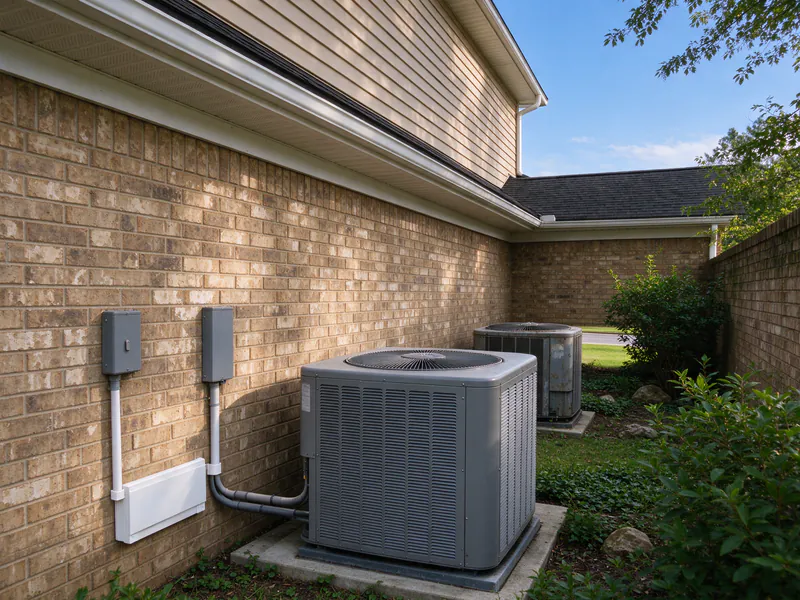
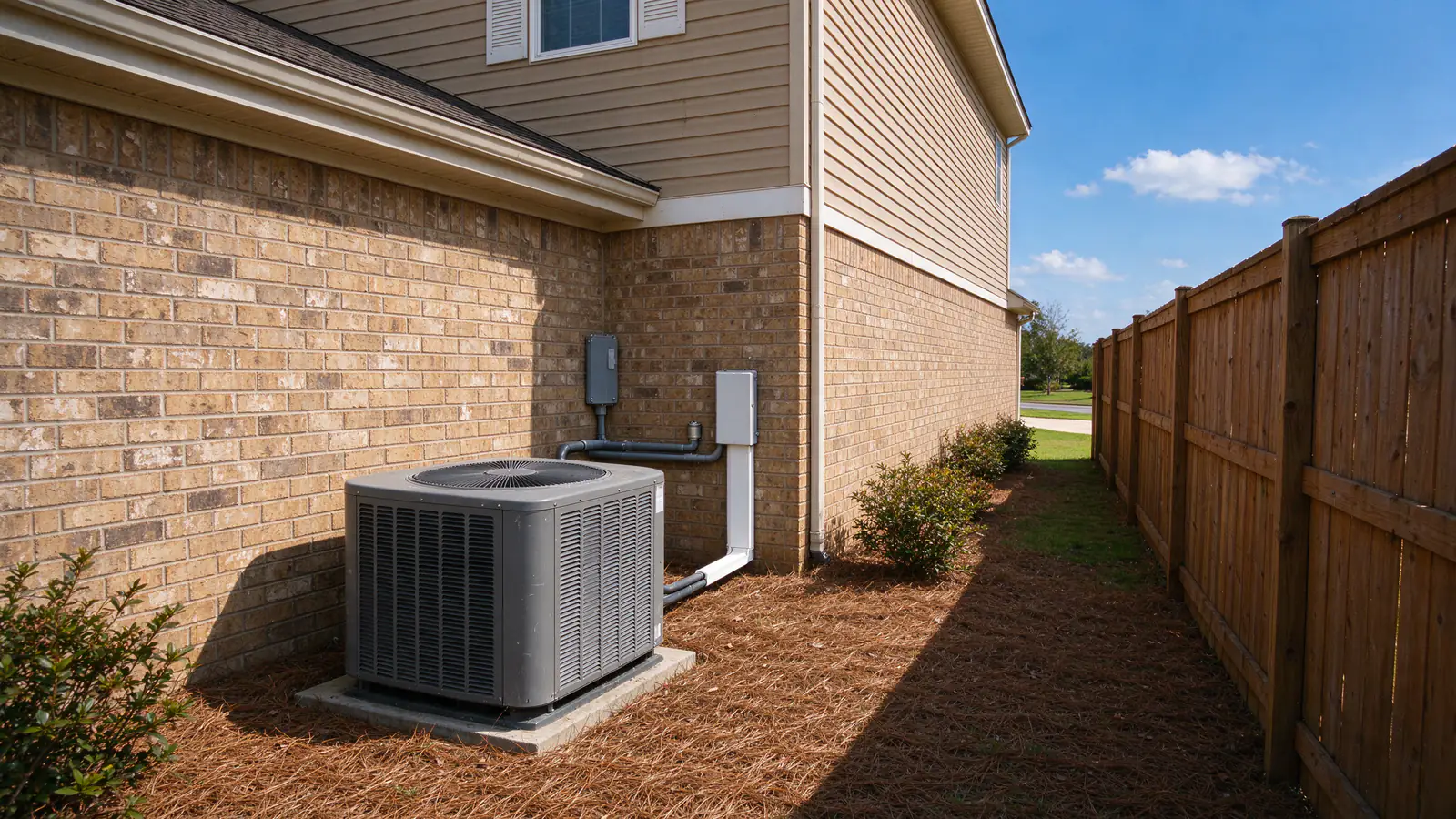
A variable speed outdoor unit is quieter most of the time, which helps on narrow side yards where sound bounces between brick walls. We still keep it off the bedroom side where the lot allows. Placement and noise covers clearances and sound.